

FIS News
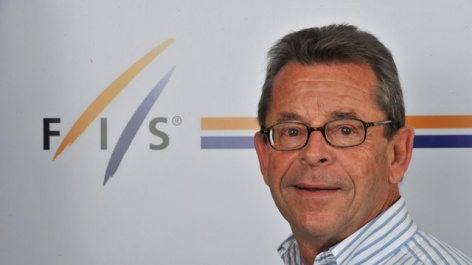

Q&A with Hubert Hörterer, Chairman of FIS’ Medical Committee
In today’s FIS Newsflash, Hubert Hörterer is providing an insight on FIS’ Medical Committee.
How did you get involved with FIS?
I was aged two when I stood on skis for the first time. During my childhood and adolescence I raced a few competitions at a local level. Later on, I studied physical education. Through a number of injuries, I discovered my passion for sports medicine and decided to undertake university studies in this field.
As a medical doctor, I had my own practice. Meanwhile, I worked for the German Ski Association on a voluntary basis as a team doctor. Through this function, I became a member of the FIS Medical Committee and was appointed chair in 2006.
How does the Medical Committee operate?
There are 31 members and two honorary members, all medical doctors from different areas of expertise. One of our members, Rasmus Damsgaard (DEN) is responsible for anti-doping. Furthermore, there are a number of Working Groups within the Committee, such as for the various FIS disciplines, Youth & Children, and the FIS Medical Guide.
These Working Groups are preparing To Do lists and its chairs are attending the respective FIS Discipline Technical Committee meetings to provide them with information and be available to discuss matters of medical nature if they arise. It is important that we are beneficial to the whole organisation.
What are the present topics on your agenda?
One of our major topics is the FIS Injury Surveillance System (FIS ISS) which has its own Steering Committee. It focuses on systematically collecting data on all injuries across the FIS disciplines to develop the means to prevent injuries effectively.
Another main topic is the supervision at major events, notably at FIS World Championships and Junior World Championships, and the optimisation of medical issues there.
Furthermore, we developed the FIS Medical Guide which provides Organisers and teams with guidelines on the management and organisational concerns linked with medical issues such as the chain of rescue. We continuously keep this guide up to date and add suggestions of supervisors from the events.
We also deal with the topic of Youth & Children and in particular how to reduce the number of injuries and avoid consequential harm in order to prevent lifelong injuries from high-performance sports.
Meanwhile, we listen to injury statistics from the Oslo Sports Trauma Research Centre and further reports from research centres in Salzburg and Innsbruck in the areas of injury prophylaxis and injury prevention.
Where do you see areas for improvement?
FIS and its National Ski Associations require that each Organiser strives to meet the highest possible medical standard of care in each member country and locality. We are working on supporting such nations and Organisers who need special assistance in the medical field in order to reduce the risk of injuries not only in-competition but also in terms of evacuation of injured athletes and medical treatment in hospitals. The FIS Medical Guide is a good tool to do so and there will be an upcoming workshop with Organisers to train them and ensure that every possible effort is made to protect the health of the athletes.
How did you get involved with FIS?
I was aged two when I stood on skis for the first time. During my childhood and adolescence I raced a few competitions at a local level. Later on, I studied physical education. Through a number of injuries, I discovered my passion for sports medicine and decided to undertake university studies in this field.
As a medical doctor, I had my own practice. Meanwhile, I worked for the German Ski Association on a voluntary basis as a team doctor. Through this function, I became a member of the FIS Medical Committee and was appointed chair in 2006.
How does the Medical Committee operate?
There are 31 members and two honorary members, all medical doctors from different areas of expertise. One of our members, Rasmus Damsgaard (DEN) is responsible for anti-doping. Furthermore, there are a number of Working Groups within the Committee, such as for the various FIS disciplines, Youth & Children, and the FIS Medical Guide.
These Working Groups are preparing To Do lists and its chairs are attending the respective FIS Discipline Technical Committee meetings to provide them with information and be available to discuss matters of medical nature if they arise. It is important that we are beneficial to the whole organisation.
What are the present topics on your agenda?
One of our major topics is the FIS Injury Surveillance System (FIS ISS) which has its own Steering Committee. It focuses on systematically collecting data on all injuries across the FIS disciplines to develop the means to prevent injuries effectively.
Another main topic is the supervision at major events, notably at FIS World Championships and Junior World Championships, and the optimisation of medical issues there.
Furthermore, we developed the FIS Medical Guide which provides Organisers and teams with guidelines on the management and organisational concerns linked with medical issues such as the chain of rescue. We continuously keep this guide up to date and add suggestions of supervisors from the events.
We also deal with the topic of Youth & Children and in particular how to reduce the number of injuries and avoid consequential harm in order to prevent lifelong injuries from high-performance sports.
Meanwhile, we listen to injury statistics from the Oslo Sports Trauma Research Centre and further reports from research centres in Salzburg and Innsbruck in the areas of injury prophylaxis and injury prevention.
Where do you see areas for improvement?
FIS and its National Ski Associations require that each Organiser strives to meet the highest possible medical standard of care in each member country and locality. We are working on supporting such nations and Organisers who need special assistance in the medical field in order to reduce the risk of injuries not only in-competition but also in terms of evacuation of injured athletes and medical treatment in hospitals. The FIS Medical Guide is a good tool to do so and there will be an upcoming workshop with Organisers to train them and ensure that every possible effort is made to protect the health of the athletes.
Source: fis-ski.com