


The 2016-2017 season marks the 50th anniversary of the FIS Alpine World Cup. To celebrate the history of the World Cup, FIS will feature an article each week during the season looking back on greatest stories, moments, and facts surrounding 50 years of the White Circus.
For the 19th time since 1993, Soelden will host the opening of the Audi FIS Alpine World Cup season – and launch a winter of celebrations as the international ski circuit is celebrating its 50th anniversary in a few months.
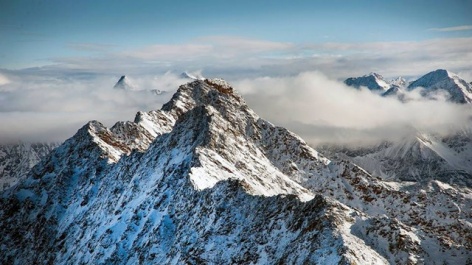
The famous Tyrolean resort located at the end of the popular Oetztal Valley has established itself as one of the most exhilarating events on the tour – and not only because of the high quality of the mostly spectacular competitions perfectly organized above 3,000 meters.
The women's and men’s giant slaloms held on the treacherous Rettenbacher glacier overlooking Soelden represent for sure the highlights of the week – yet from Wednesday to Friday night, visitors, officials and racers will already be very busy running from early morning to late in the evening from one meeting or press conference to the other as various sponsors, ski companies or sports organizations invite them to attend their presentation.
On Thursday evening, the International Association of Ski Journalists (AIJS) awards its traditional ‘Skieur d’Or’ Trophy to one of the key athletes of the previous season, while leaders of the International Ski Federation (FIS) are discussing the future of the sport with hundreds of reporters and team officials on Friday afternoon during the popular Forum Alpinum. That gathering also represents a great opportunity for the press to collect firsthand information on new rules and major changes regarding alpine ski racing.
Last winter’s overall World Cup champions will also be present at the sport arena to answer questions from the emcee running the show – in this case former British racer Nick Fellows – who has become the “English voice” for alpine racing over the years.
A New Era
Looking forward to the nearly 20 weeks of World Cup competitions from Soelden to the Finals in Aspen, Colo., at the end of March 2017– and not counting the two weeks of FIS World Championships in Switzerland in February – it’s difficult to believe that the very first World Cup calendar only lasted nine weeks from Berchtesgaden, Germany, on Jan. 5, 1967 to Jackson Hole, Wyo., where the Finals took place on March 25-26. That first season included a long pause in February to allow the National Ski Associations to organize their national championships.
In fact everything has changed in the last 50 years except the color of snow – still white, of course, with sometimes a few blue stripes in the turns, but it’s way icier nowadays. With a total of 77 competitions held in 31 resorts distributed in 14 countries, the 2017 World Cup tour has doubled the program of the first circuit that (only) included 34 races in 16 different locations and a modest total of six countries.
Beginning the World Cup season in Europe in late October would appear amazing for the veterans from the 1960s whose international tour usually started in Bavaria in the first days of January – after spending only a few weeks on snow in October to find their best rhythm on skis. Some of them raced in August 1966 at Portillo, Chile, on occasion of the extraordinary FIS World Championships, and 20 years later also in Las Lenas, Argentina; Thredbo, Australia; or Mt Hutt in New Zealand, yet these experiences were not repeated.
The appeal to start the World Cup season so early came from the managers of established resorts in the Alps hosting valuable training camps in the summer and fall – mostly Tignes (FRA), Saas-Fee (SUI) and Soelden. To convince the FIS officials about the ability of his area to host a good race on a glacier, Jakob Falkner (owner of the local ski lift company) and his friend Serge Lang (former President of the World Cup Committee and President of the AIJS) decided to create a ‘special event’ for a select group of top champions. They also invited a group of journalists to attend a conference on the future of ski racing that also included longtime FIS President Marc Hodler. The competition – an exciting parallel slalom won by Switzerland’s Pirmin Zurbriggen – took place in October 1989 with beautiful weather conditions and the round table discussion with Mr. Hodler was also very interesting – so much that a few years later it became an official FIS Forum Alpinum!
A Strong Tradition for Soelden
Four years later, the World Cup champions were (officially) back on the Rettenbacher glacier for good and strongly helped promoting their discipline and early skiing with a series of exciting races mostly won by great champions! Tens of thousands of spectators move up there each year to watch the races – and they also enjoyed looking at the funny presentation of the fan clubs marching through Soelden’s main street on Saturday afternoon.
In the mid 1990s, Saas-Fee and Tignes were also included in the World Cup calendar – unfortunately bad weather prevented the Swiss resort from holding the planned races on its slopes and they pulled out of the tour afterwards. The famous French glaciers hosted three events in total afterwards, the last one in late October 1999 was clinched by Hermann Maier. In 1997, it had even organized two giant slaloms and parallel slaloms for the athletes – yet the experience discontinued in the following years to leave Soelden as the only World Cup race on a glacier allowed on the FIS World Cup calendar.
Following the weekend's races in Soelden, a short break is planned for the tour. Then two slaloms are scheduled in Levi, Finland, for November followed soon after by the first competitions in North America, where the opening speed races are planned in Lake Louise, Alberta. The countdown has started – enjoy the show!
A veteran on the World Cup tour since the late 1960s, Patrick Lang has closely followed the evolution of alpine ski racing and the start of the World Cup circuit along with his father Serge Lang, one of the initiators of the event in 1965-66.
© FIS - PkL - no reproduction/translation permitted
Source: fis-ski.com