

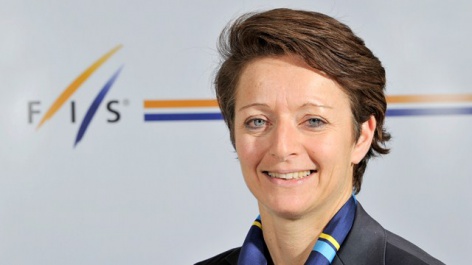

It's been a busy period on the eve of the competition season for FIS Secretary General Sarah Lewis. The FIS Council Meeting took place on 7th November followed directly in Lausanne by theSportAccord Extraordinary General Assembly and IF Forum, as well as a key AIOWF Meeting with the IOC to address the roadmap for the 2026 Olympic Winter Games. She was recently named to the Coordination Commission for the 2020 Youth Olympic Games in Lausanne (SUI). FIS Newsflash took the chance to catch up with her on the eve of the 2015/16 season.
Tell us about your new role with the Youth Olympic Games? What do you expect from Lausanne 2020? What is the role of the Coordination Commission for the YOG?
It is an exciting opportunity for the City of Lausanne, the Olympic Capital to host the Winter YOG. As home to the International Olympic Committee since 1915 and more than 50 International Federations, the citizens live and breathe Sport and the Olympics in their daily lives.
The IOC Coordination Group is responsible for supporting and overseeing the Organising Committee's preparations bringing a range of expertise from the Olympic Movement. I'm representing the International Federations, alongside IOC Members who have been involved with the previous YOG, a NOC Secretary General and a former Organising Committee leader. The Chair, Danka Bartekova (SVK) is a member of the IOC Athletes’ Commission which aligns perfectly with the vision for the Games to activate young persons in sport.
Our own FIS Bring Children to the Programme has been a part of the YOG in Innsbruck 2012 and will feature in Lillehammer 2016 too. I will be contributing experience about the organisation for the competitions and the arrangements, as well as ideas how we can get even more youngsters involved with and through the YOG 2020 in Lausanne, aside from the competitions.
Lausanne will be the third edition of the Winter YOG, how do you feel the event is progressing?
There are always challenges introducing new events, especially on an "Olympic" scale and the Winter YOG has only been staged once until now, with Lillehammer 2016 fast approaching in February 2016. Finding the right identity for the Winter YOG has been one of those questions; whether it is a competition for elite youngsters, or if it serves as a platform to involve and encourage youngsters to participate in sport. And it appears from the work so far that the Winter YOG can actually serve both aspects. The Olympic spirit and competitions can inspire participating youngsters who already have sporting ambitions to pursue their goals and dreams. Whilst additionally there is a great opportunity presented with the YOG sports venues to create activities and engagement for youngsters from all over the country to be a part of the festival and thereby hopefully develop an affinity for winter sports.
FIS' role with the AIOWF is important within the winter sports family. What are the major updates and focus from the Olympic Winter Sports Federations as winter is approaching?
The seven International Winter Sports Federations on the Programme of the Olympic Winter Games who we met last week: Biathlon, Bobsleigh and Skeleton, Curling, Figure and Speed Skating, Ice Hockey, Luge, as well as FIS with Skiing and Snowboard are all geared up for the season ahead. During our stay in Lausanne for the IF Forum, the IOC convened a meeting to discuss potential bids for the 2026 Olympic Winter Games. This edition will be the first to embrace the Olympic Agenda 2020 Recommendations from the outset, which offers new opportunities for the Host City, with a key focus on sustainability and the legacy aspects.
SportAccord underwent a sudden change in the spring and FIS President Gian Franco Kasper is serving as interim Chair of the Council. Are you enjoying working with the larger sports family?
This additional role for me of overseeing and supporting the administration of SportAccord since June was certainly not planned, but since I have been part of the SportAccord Convention steering group since it was established in 2002, I already know many of the organisations and persons involved. From a FIS perspective it is certainly valuable to interact with other International Federations from the Summer and non-Olympic Sports and gain different perspectives and ideas.
People say this is a season with no natural highlight, but we know that there are many events that you are looking forward to. What are your personal highlights on the calendar this season?
My first wish is that we will have a snowy season everywhere and great enthusiasm for skiing and snowboarding. Hopefully the great majority of the 7'000 FIS competitions can take place and if one or the other is cancelled due to big snowfalls, the tourism industry won't be too disappointed. The FIS Ski Flying World Championships in Kulm (AUT) in January will be a great event on the legendary jumping hill that always stages exciting competitions, supported by many enthusiastic spectators. This season sees the FIS World Cup series taking centre stage and without singling out individual events, the mix between traditional classic events and anniversary events, alongside new venues and organising nations should lead to an interesting season.
A main task this season will be working with the Organisers of the FIS Alpine and Nordic World Championships in 2017 in St. Moritz (SUI) and Lahti (FIN) who are staging major World Cup events in 2016 that will also serve as the dress rehearsals for the following year's Championships.
I have a new pair of touring skis ready to go, so I hope I'll have a chance to use them regularly during the season!
Source: fis-ski.com